


Summer camping is one of the most enjoyable outdoor experiences. Warm weather, longer daylight hours, and beautiful natural landscapes make it the perfect season for camping trips. However, while summer offers ideal conditions for outdoor activities, it can also create challenges inside camping tents, especially when temperatures rise at night.
Without proper preparation, your camping tent can quickly turn into an uncomfortable space filled with heat, humidity, and poor airflow. Whether you are using family camping tents, lightweight camping tents, or compact outdoor camping tents, understanding how to manage temperature and comfort is essential.
In this guide, we will explore practical and effective tips to help you stay comfortable inside camping tents during summer, ensuring your outdoor adventure remains enjoyable from day to night.

Choose the Right Camping Tent for Summer Conditions
Comfort begins with selecting the right tent. Not all camping tents are designed for hot weather.
For summer camping, prioritize tents that offer:
Excellent ventilation
Lightweight materials
Large mesh panels
Breathable fabric construction
Easy airflow design
Lightweight camping tents are especially suitable for summer hiking and backpacking because they reduce heat retention and improve portability.
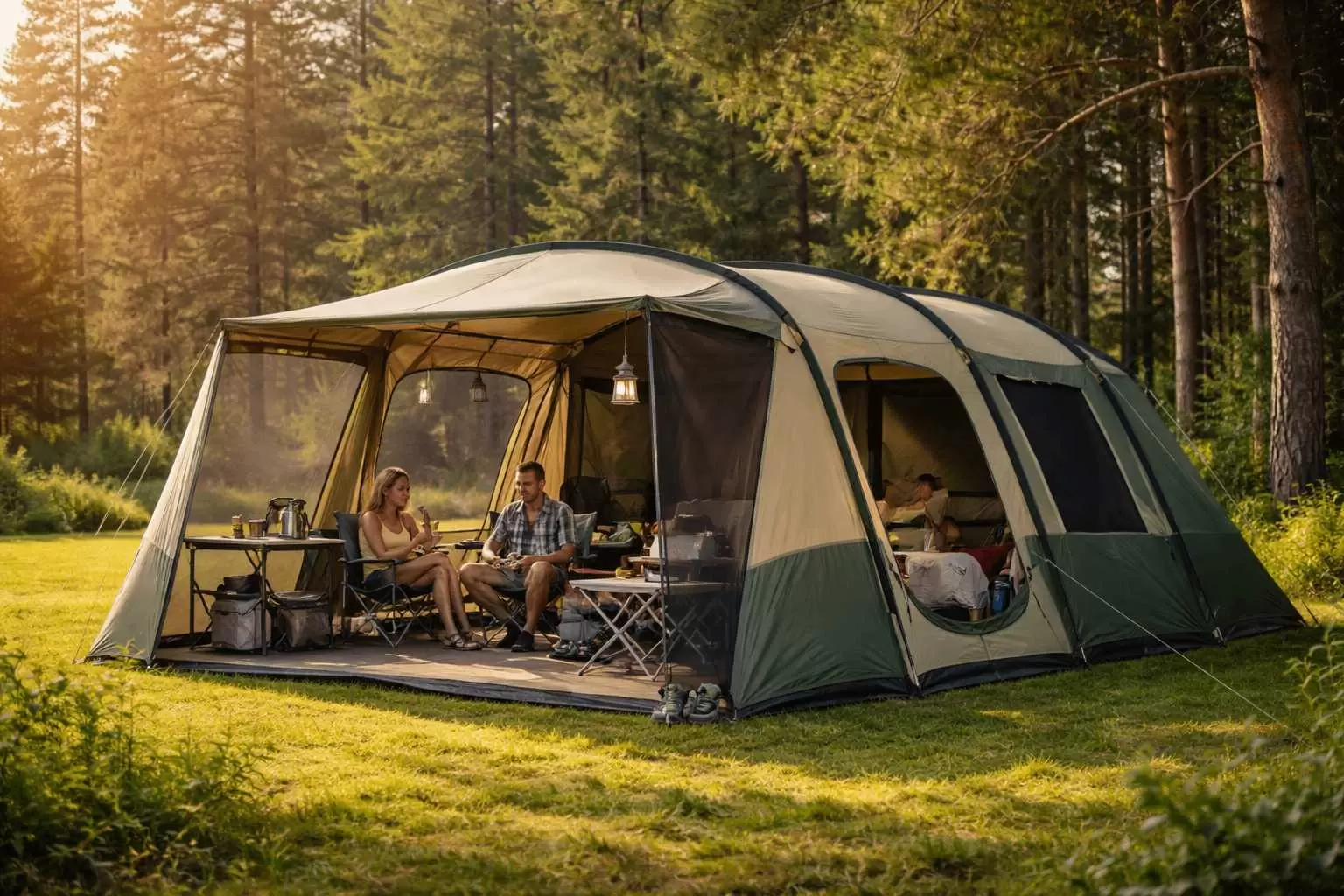
Meanwhile, family camping tents are better for group camping but should include multiple windows or ventilation openings to avoid overheating.
Avoid heavy, double-layer insulated tents unless you are camping in cooler mountain areas.
Set Up Your Camping Tent in a Shaded Area
One of the simplest ways to improve comfort inside camping tents is choosing the right location.
Direct sunlight can significantly increase internal tent temperature. Even high-quality waterproof camping tents can become hot if exposed to the sun for long periods.
When selecting a campsite:
Look for natural shade from trees
Position your tent away from direct afternoon sun
Use hills or terrain features for shade
Avoid open, sun-exposed fields when possible
A shaded setup can reduce internal temperature by several degrees, making a noticeable difference in comfort.
Maximize Ventilation Inside Camping Tents
Airflow is the most important factor for staying cool inside camping tents during summer.
Most modern outdoor camping tents are designed with mesh windows, ventilation panels, and roof vents. However, many campers fail to use them properly.
To improve airflow:
Keep all mesh windows open when possible
Open both entrance and rear vents
Align tent doors with wind direction
Avoid blocking ventilation with gear
Cross-ventilation allows hot air to escape while pulling cooler air inside the tent.
For larger family camping tents, keeping multiple doors open can significantly improve airflow throughout the interior space.
Use a Breathable Tent Groundsheet
Heat doesn’t only come from above. It also comes from the ground.
During summer, the ground can absorb heat during the day and release it at night, increasing the temperature inside your camping tent.
Using a breathable groundsheet helps:
Reduce heat transfer
Improve moisture control
Prevent condensation buildup
Avoid thick plastic sheets directly under your tent unless necessary for waterproof protection. Instead, choose lightweight and breathable materials designed for camping use.
Choose the Right Sleeping Gear for Summer
Inside camping tents, sleeping comfort depends heavily on your gear.
In summer conditions, avoid heavy sleeping bags designed for cold weather. Instead, choose:
Lightweight sleeping bags
Breathable cotton liners
Cooling sleeping pads
Moisture-wicking bedding
A proper sleeping setup helps regulate body temperature and reduces overheating inside tents.
Even lightweight camping tents can feel uncomfortable if paired with heavy insulation gear during hot nights.
Reduce Moisture and Condensation
Humidity is a common issue in summer camping.
When warm air inside the tent meets cooler surfaces, condensation forms. This can make your sleeping environment damp and uncomfortable.
To reduce moisture inside camping tents:
Keep ventilation open at all times
Avoid drying wet clothes inside the tent
Use moisture-absorbing products if needed
Wipe down condensation in the morning
Proper airflow is the most effective way to manage humidity in camping tents.
Use Reflective Sun Protection Covers
Sun exposure is one of the biggest challenges in summer camping.
Adding a reflective tarp or sunshade over your tent can significantly reduce heat buildup.
These covers:
Reflect sunlight away from the tent
Reduce internal temperature
Protect tent fabric from UV damage
Improve long-term durability of waterproof camping tents
Position the cover slightly above the tent to allow air circulation between layers.
This simple addition can dramatically improve comfort during hot days.
Keep the Interior Organized and Minimal
Clutter inside camping tents can trap heat and reduce airflow.
To improve comfort:
Avoid storing unnecessary gear inside the tent
Keep sleeping areas clear
Use external storage pockets when possible
Reduce bulky items inside the tent
Minimal interior setup allows air to circulate more freely, especially in smaller outdoor camping tents.
Stay Hydrated Throughout the Night
Comfort inside camping tents is not only about temperature but also hydration.
Hot summer nights can lead to dehydration, especially after long outdoor activities.
Keep water:
Inside the tent in a safe container
Within easy reach
Cool but not directly exposed to heat
Proper hydration helps regulate body temperature and improves sleep quality.
Use Battery-Powered Fans for Extra Cooling
A small portable fan can greatly improve airflow inside camping tents.
Modern camping fans are:
Lightweight
Rechargeable
Quiet
Easy to hang inside tents
Even small air movement can reduce heat buildup and improve sleeping comfort.
This is especially useful in family camping tents, where multiple people share the same space.
Avoid Cooking Near or Inside Your Tent
Cooking inside or near camping tents can quickly raise internal temperatures.
Heat from cooking equipment not only increases discomfort but also attracts insects and creates safety risks.
Always cook:
Outside the tent
In a well-ventilated area
Away from sleeping zones
Keeping heat sources away from your camping tents ensures a cooler and safer sleeping environment.
Wear Suitable Night Clothing
Clothing plays a major role in summer camping comfort.
Inside tents, avoid thick or synthetic materials that trap heat.
Instead, wear:
Loose cotton clothing
Moisture-wicking fabrics
Lightweight sleepwear
Proper clothing allows your body to cool naturally, improving sleep quality even in warm conditions.
Cool Down Your Tent Before Sleeping
Before going to bed, you can reduce tent temperature using simple techniques:
Open all vents 1–2 hours before sleeping
Allow evening breeze to flow through
Remove heated gear from inside
Shade the tent exterior if possible
These steps help prepare your camping tents for a more comfortable sleeping environment.
Choose the Right Tent Color
Tent color can influence heat absorption.
Lighter-colored camping tents tend to reflect sunlight better than darker ones, reducing heat buildup during the day.
For summer camping, consider:
White
Light gray
Beige
Light green
Dark-colored tents may absorb more heat, making them less comfortable in hot weather.
Final Thoughts
Staying comfortable inside camping tents during summer requires a combination of smart planning, proper gear selection, and effective campsite management.
From choosing breathable lightweight camping tents to maximizing ventilation and using shade effectively, every small adjustment contributes to a cooler and more enjoyable camping experience.
Whether you are using spacious family camping tents or compact backpacking shelters, understanding how to control heat, airflow, and moisture will significantly improve your outdoor comfort.
With the right preparation, summer camping becomes not just bearable—but truly enjoyable, allowing you to fully experience nature without sacrificing comfort.






 SIGN UP FOR NEWSLETTER
 Room 2015, Building 1, No. 114, Pudong, Xiaojiang Village, Shuangpu Town, Xihu District, Hangzhou City, Zhejiang Province
