


Setting up a shelter in extreme environments is a critical skill for anyone involved in winter camping, alpine trekking, or remote outdoor exploration. When temperatures drop and weather becomes unpredictable, knowing how to properly set up a four-season camping tent can significantly improve both safety and comfort.
Unlike a standard three-season camping tent, a four-season model is engineered for snow, high winds, and freezing temperatures. However, even the most durable all-season camping tent will fail to perform well if it is not pitched correctly. In harsh conditions, proper setup technique matters just as much as the tent’s design.
This guide explains step-by-step how to set up a winter camping tent for extreme weather conditions, while also sharing practical field-tested strategies used by mountaineers and expedition campers.
1. Understanding What Makes a Four-Season Camping Tent Different
Before setting up a heavy-duty camping tent for winter use, it is important to understand its structural design.
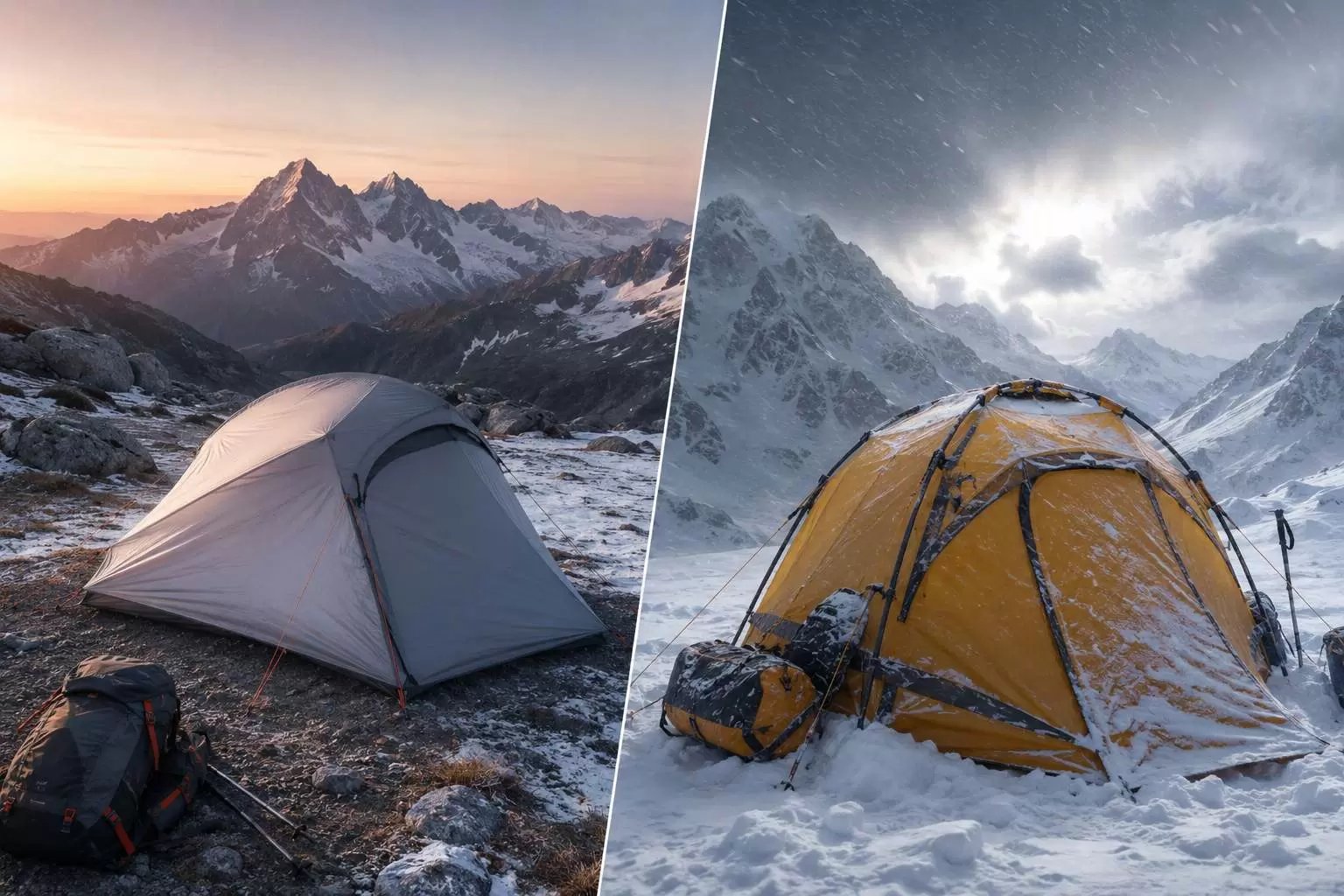
Most high-quality four-season camping tents for mountaineering feature:
Reinforced aluminum poles for wind resistance
Geodesic or dome structures for snow shedding
Thicker ripstop fabric for insulation
Minimal mesh panels to retain heat
Multiple guy line points for storm stability
These features make them ideal for cold weather camping tents used in alpine environments, where conditions can change rapidly.
However, their strength also means they require more careful setup compared to lightweight backpacking tents.
2. Choosing the Right Campsite for Your Camping Tent
The performance of any outdoor camping tent for extreme conditions begins with location selection.
Avoid exposed areas such as:
Ridge tops with direct wind exposure
Open snowfields without natural barriers
Avalanche-prone slopes
Instead, choose:
Sheltered areas behind rock formations
Tree-protected zones (if available)
Natural depressions that reduce wind impact
For winter camping tent setups in snowy terrain, compact the snow firmly before pitching. A stable base prevents shifting during overnight temperature changes.
3. Preparing Your Camping Tent Gear Before Setup
When dealing with a portable camping tent for harsh environments, preparation saves time and reduces exposure to cold weather.
Lay out all components in advance:
Tent body
Flysheet
Poles and connectors
Snow stakes or heavy-duty anchors
Guy lines
Organizing your expedition camping tent equipment before setup ensures that no parts are lost in snow or wind.
4. Anchoring Your Camping Tent Before Full Assembly
In strong winds or snowstorms, one of the most important techniques for a wind-resistant camping tent setup is pre-anchoring.
Start by:
Laying out the tent footprint
Securing wind-facing corners first
Using snow anchors or buried objects in deep snow
For arctic camping tent installation, use “deadman anchors,” which involve burying objects horizontally in compacted snow. This provides significantly stronger holding power than surface stakes.
This step prevents the tent from being lifted or displaced during assembly.
5. Assembling the Frame of a Four-Season Camping Tent
Most durable camping tents for extreme weather use dome or geodesic structures designed to distribute stress evenly.
Follow these steps:
Insert poles into sleeves or clips
Cross and connect pole intersections
Raise the structure gradually
Ensure all joints are fully locked
In cold conditions, especially when using a winter-ready camping tent system, poles may become stiff. Handle them carefully to avoid damage.
Balanced tension is key to maintaining structural integrity.
6. Securing Guy Lines for Maximum Stability
Guy lines are essential for any storm-proof camping tent setup, especially in exposed environments.
Best practices include:
Using all available attachment points
Angling lines at approximately 45 degrees
Tightening evenly across all sides
Reinforcing wind-facing direction first
For high-altitude camping tent stability, additional anchoring may be required due to stronger wind pressure at elevation.
Proper guy line tension significantly improves wind resistance and prevents deformation.
7. Installing the Outer Fly for Weather Protection
The rainfly is a critical component of any all-weather camping tent system.
During installation:
Attach it after the frame is stable
Ensure full coverage without exposed gaps
Secure all buckles and hooks firmly
Prevent fabric from touching the inner tent where possible
In snowy conditions, a properly installed flysheet helps reduce condensation buildup inside a cold climate camping tent.
8. Enhancing Protection Around Your Camping Tent
To improve performance of your four-season outdoor camping tent, consider reinforcing the surrounding environment.
You can:
Build snow walls on wind-facing sides
Bury tent skirts in snow for insulation
Use backpacks as wind barriers
Reinforce anchor points if wind increases
These small adjustments significantly improve the efficiency of a heavy-duty winter camping tent setup.
9. Managing Ventilation in a Closed Camping Tent Environment
Even in freezing weather, airflow is essential in any insulated camping tent for winter use.
Without ventilation, condensation accumulates and may freeze inside the tent.
To maintain balance:
Open top vents slightly
Avoid sealing all entry points
Keep snow from blocking airflow zones
A well-ventilated four-season backpacking camping tent stays warmer, drier, and safer overnight.
10. Final Safety Inspection Before Use
Before entering your storm-rated camping tent, perform a full inspection:
Confirm all stakes are secure
Check guy line tension
Remove excess snow buildup
Ensure no fabric is under strain
In heavy snowfall, periodic maintenance is necessary to prevent collapse under weight.
11. Common Mistakes When Setting Up a Camping Tent
Many campers struggle in extreme environments due to simple errors such as:
Choosing exposed terrain
Ignoring wind direction
Failing to anchor before assembly
Over-tightening structural poles
Blocking ventilation completely
Avoiding these mistakes ensures your expedition-grade camping tent system performs as intended.
Conclusion
Knowing how to set up a four-season camping tent in harsh conditions is essential for safe winter travel, mountaineering, and remote outdoor exploration. The key is not just having a high-quality all-season camping tent, but also understanding how to properly pitch and reinforce it in real-world conditions.
With the right campsite selection, anchoring strategy, and weather adaptation techniques, your winter camping tent setup can remain stable even in snowstorms and high winds.
Mastering these skills ensures that your outdoor shelter is not just a tent—but a reliable survival system in extreme environments.







 SIGN UP FOR NEWSLETTER
 Room 2015, Building 1, No. 114, Pudong, Xiaojiang Village, Shuangpu Town, Xihu District, Hangzhou City, Zhejiang Province
